GHK-Cu
A tiny copper-binding peptide (glycine-histidine-lysine) found naturally in human blood. Well known in skincare; injectable use has little human data.
- amino acids: glycine, histidine and lysine
- 3
- binds copper, forming GHK-Cu
- Cu
amino acids: glycine, histidine and lysine
binds copper, forming GHK-Cu
2 sources, every claim linked. PepDose sells no peptides and takes no vendor money.
01 · What it is
What is GHK-Cu?
GHK is a three-amino-acid peptide that the body makes naturally; it binds copper to form GHK-Cu. Levels in the blood fall with age.
It is a common ingredient in topical skincare. Injectable GHK-Cu is not an approved medicine.
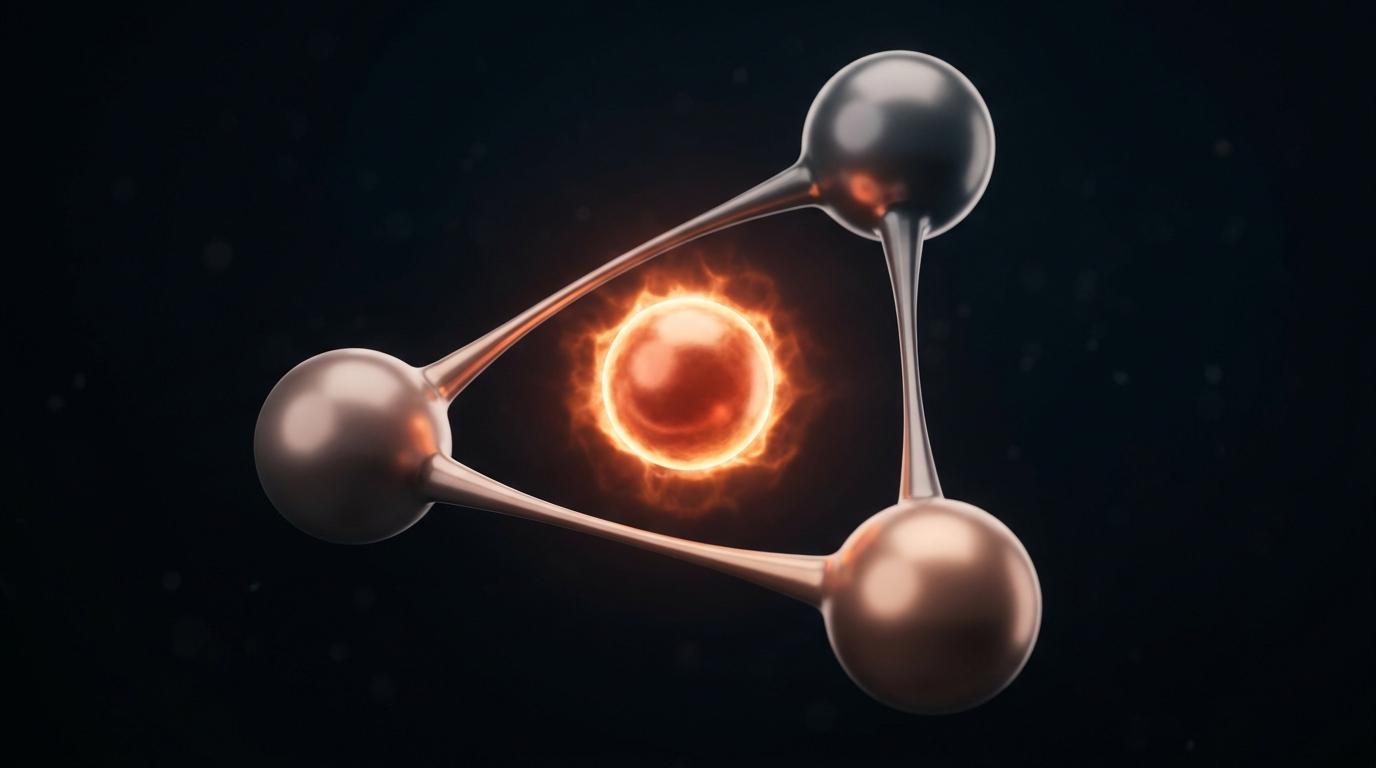
Illustration.
On the skin (skincare)
- Common ingredient in creams and serums
- Applied to the skin, not injected
- The familiar, everyday use
Injected
- Not an approved drug
- FDA cited immune-reaction risk and limited human data[2]
- Far less human safety data
02 · How it works
How does GHK-Cu work?
In lab studies GHK-Cu increases collagen, elastin and glycosaminoglycan production, supports skin fibroblasts, and affects the activity of many genes involved in repair and inflammation.
Three amino acids holding one copper ion
What lab studies saw in skin
- More collagen
- More elastin
- More glycosaminoglycans
- Supports fibroblasts
Lab findings summarised in a review, not results from injections in people.[1]
03 · Research
What does the research on GHK-Cu show?
Most GHK-Cu research is lab and animal work. A 2018 review summarises evidence that it stimulates collagen and elastin production, blood vessel and nerve growth, and tissue repair in skin, lung, bone, liver and stomach lining. Most of this is lab work, not trials of injections in people.
- A review summarises lab and animal evidence that GHK-Cu stimulates collagen and elastin production, blood vessel and nerve growth, and tissue repair in skin, lung, bone, liver and stomach lining.[1]
- The same review describes gene-expression data suggesting it affects many repair and anti-inflammatory pathways. Most of this is lab work, not trials of injections in people.[1]
04 · Side effects
What are the side effects of GHK-Cu?
The side effects of injected GHK-Cu are not well known. The FDA cited a risk of immune reactions and limited human data for injectable GHK-Cu. It is widely used on the skin in skincare products, but injections bypass the skin entirely and have far less human safety data.
- For injectable GHK-Cu, the FDA cited a risk of immune reactions and limited human data.[2]
Commonly listed reasons to avoid it
- Pregnancy and breastfeeding
- Copper metabolism disorders such as Wilson's disease
Not approved
05 · Legal and regulatory status
Is GHK-Cu FDA-approved?
No. Injectable GHK-Cu is not FDA-approved as a drug. It was on the FDA's list of compounding substances that may present significant safety risks; as of April 2026 that listing shows as withdrawn. GHK-Cu is also a common ingredient in topical skincare, which is a different use.
- Not FDA-approved as a drug. Injectable GHK-Cu was on the FDA's compounding safety-risk list; as of April 2026 that listing shows as withdrawn.[2]
06 · Mixing and units
How do you mix GHK-Cu and read the units?
Units on a U-100 syringe = dose (mg) ÷ concentration (mg/mL) × 100. For example, a 50 mg vial mixed with 2 mL of bacteriostatic water is 25 mg/mL, so 10 units hold 2.5 mg. Pick your vial and water below; the maths is the same for any brand of GHK-Cu.
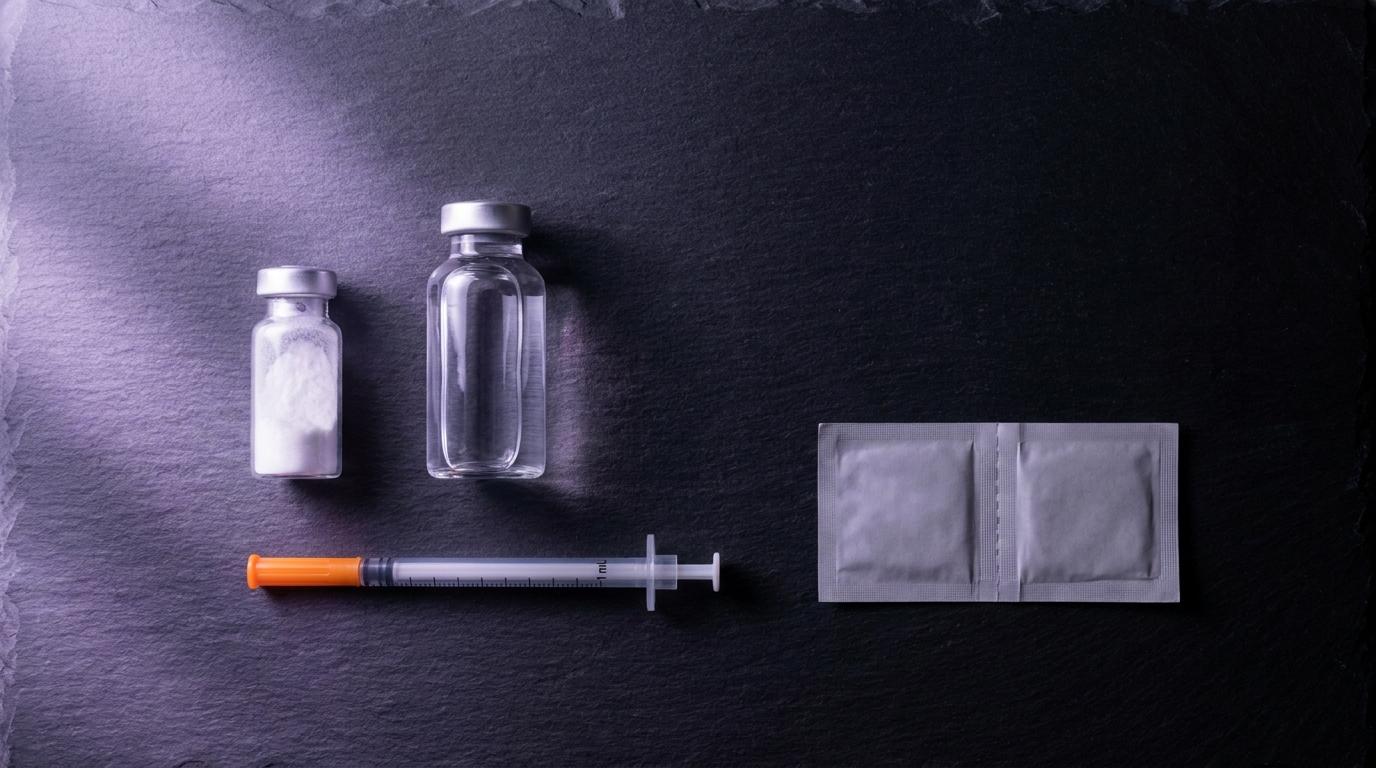
- 1 Peptide vial
- 2 Bacteriostatic water
- 3 U-100 syringe
- 4 Alcohol swabs
Vial size
Water added
- GHK-Cu in the vial
- 50 mg
- Water added
- 2 mL
- Strength
- 25 mg/mL
- 1 unit holds
- 250 mcg
- Step 1
Clean
Wipe the vial stopper with an alcohol swab and let it dry.
- Step 2
Add water
Let the bacteriostatic water run slowly down the inside wall of the vial.
- Step 3
Swirl
Swirl or roll gently until clear. Don't shake.
- Step 4
Label and chill
Write the date and strength (mg/mL) on the vial and keep it in the fridge.
The full GHK-Cu protocol
- Week-by-week schedule and titration
- What to track and when
- Stacking notes and timing
- Dose tracker with injection-site rotation
- Every study explained in detail
- Step-by-step start guide
07 · Questions
Common questions about GHK-Cu
How much BAC water for GHK-Cu 50 mg?
With 2 mL the vial is 25 mg/mL, so 10 units holds 2.5 mg. With 5 mL it is 10 mg/mL and 10 units holds 1 mg. GHK-Cu vials are large, so check the result fits inside your vial.
Is injectable GHK-Cu the same as copper peptide serum?
Same molecule, different use. Skincare products are applied to the skin. Injections bypass the skin entirely and have far less human safety data.
What does GHK-Cu do?
In lab studies GHK-Cu increases collagen, elastin and glycosaminoglycan production and supports skin fibroblasts. Most of the evidence is lab and animal work, not trials of injections in people.
Is injectable GHK-Cu FDA-approved?
No. Injectable GHK-Cu is not an approved drug. It was on the FDA's compounding safety-risk list; as of April 2026 that listing shows as withdrawn.
What are the side effects of GHK-Cu injections?
They are not well known. For injectable GHK-Cu the FDA cited a risk of immune reactions and limited human data.
How much BAC water for GHK-Cu 100 mg?
With 5 mL the vial is 20 mg/mL, so 10 units on a U-100 syringe holds 2 mg. With 3 mL it is about 33.3 mg/mL and 10 units holds about 3.33 mg. Check that the amount of water fits inside your vial.
Sources
- 1.Regenerative and protective actions of the GHK-Cu peptide in the light of the new gene data
Pickart L, Margolina A. Int J Mol Sci 2018;19:1987 · Review - 2.FDA compounding safety-risk list
FDA. Bulk drug substances for compounding that may present significant safety risks (as of Apr 22, 2026) · FDA