NAD+
Nicotinamide adenine dinucleotide, a coenzyme every cell uses to make energy. Levels decline with age; whether injecting it helps is not established.
- with no rise in blood NAD+ at the start of a 6-hour IV drip (small pilot)
- 2 h
- for any use as a drug
- Not approved
with no rise in blood NAD+ at the start of a 6-hour IV drip (small pilot)[1]
for any use as a drug
2 sources, every claim linked. PepDose sells no peptides and takes no vendor money.
01 · What it is
What is NAD+?
NAD+ is a molecule found in every living cell. It carries electrons in energy metabolism and fuels enzymes involved in DNA repair and cell signalling.
It is given by IV drip or under-the-skin injection in wellness clinics, and sold as a powder. Injectable NAD+ is not FDA-approved for any use.
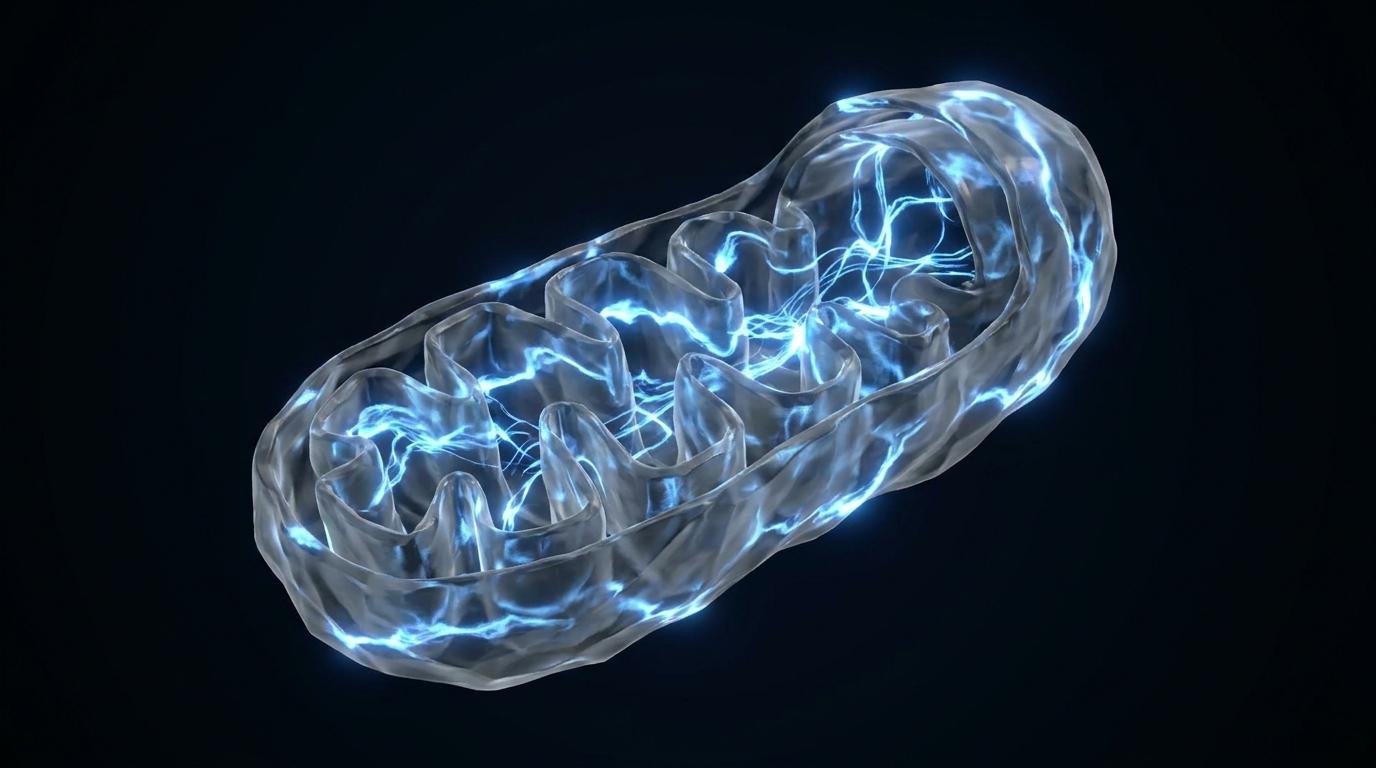
Illustration.
02 · How it works
How does NAD+ work?
The idea is to top up NAD+ directly, because levels fall with age. Most of the research supporting "NAD boosting" uses precursors taken by mouth, such as nicotinamide riboside (NR) or NMN, rather than NAD+ itself.
03 · Research
What does the research on NAD+ show?
Evidence for NAD+ injections is thin. A major review describes how NAD+ falls with age and how raising it improved health in old or diseased animals, with much more limited evidence in humans. In a small human pilot of a 6-hour IV infusion, blood NAD+ did not rise for the first 2 hours.
The 6-hour IV pilot, hour by hour
A small pilot in healthy adults, not a trial of benefits.[1]
- A major review describes how NAD+ declines with age and how raising it in old or diseased animals improved health and, in some studies, lifespan. Evidence in humans is much more limited.[2]
- In a small human pilot of a 6-hour IV infusion, NAD+ levels in the blood did not rise for the first 2 hours: the body cleared it quickly. Some was passed in urine.[1]
04 · Side effects
What are the side effects of NAD+?
The side effects of injected NAD+ are not well established. Published human data is limited to small studies, so both its side-effect profile and its long-term safety are unknown. Most human research on raising NAD+ uses precursors taken by mouth, such as NR or NMN, not injections.
- Published human data on injected NAD+ is limited to small studies, so its side-effect profile and long-term safety are not well established.[1]
Commonly listed reasons to avoid it
- Pregnancy and breastfeeding
- Active cancer or a history of cancer, unless a doctor agrees
Not approved
05 · Legal and regulatory status
Is NAD+ FDA-approved?
No. Injectable NAD+ is not FDA-approved as a drug for any use. It is given by IV drip or under-the-skin injection in wellness clinics and sold as a powder, but none of those products has been through FDA approval.
- Not FDA-approved as a drug for any use.
06 · Mixing and units
How do you mix NAD+ and read the units?
Units on a U-100 syringe = dose (mg) ÷ concentration (mg/mL) × 100. For example, a 100 mg vial mixed with 1 mL of bacteriostatic water is 100 mg/mL, so 10 units hold 10 mg. Pick your vial and water below; the maths is the same for any brand of NAD+.
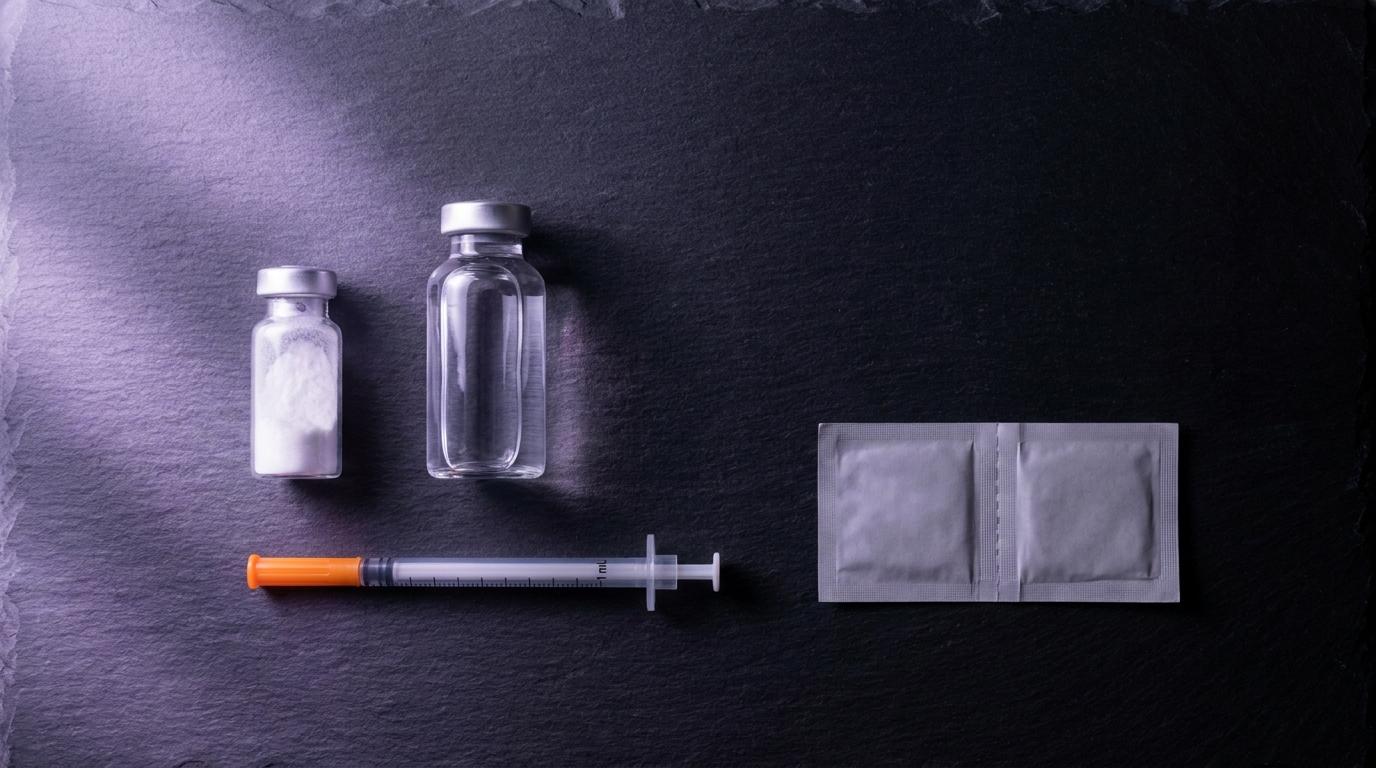
- 1 Peptide vial
- 2 Bacteriostatic water
- 3 U-100 syringe
- 4 Alcohol swabs
Vial size
Water added
- NAD+ in the vial
- 100 mg
- Water added
- 1 mL
- Strength
- 100 mg/mL
- 1 unit holds
- 1 mg
- Step 1
Clean
Wipe the vial stopper with an alcohol swab and let it dry.
- Step 2
Add water
Let the bacteriostatic water run slowly down the inside wall of the vial.
- Step 3
Swirl
Swirl or roll gently until clear. Don't shake.
- Step 4
Label and chill
Write the date and strength (mg/mL) on the vial and keep it in the fridge.
The full NAD+ protocol
- Week-by-week schedule and titration
- What to track and when
- Stacking notes and timing
- Dose tracker with injection-site rotation
- Every study explained in detail
- Step-by-step start guide
07 · Questions
Common questions about NAD+
How much BAC water for NAD+ 500 mg?
5 mL gives 100 mg/mL, so each unit is 1 mg and 50 units is 50 mg. With 4 mL it is 125 mg/mL. Large amounts need a big vial; check the total fits.
How much water for NAD+ 1000 mg?
With 10 mL the vial is 100 mg/mL (1 mg per unit). With 5 mL it is 200 mg/mL (2 mg per unit). Many vials can't hold 10 mL, so check before adding.
Are NAD+ injections better than NMN or NR?
Unknown. Most of the human research uses oral precursors. The one published IV study showed the body clears injected NAD+ quickly. No trial has compared them directly.
What is NAD+?
NAD+ (nicotinamide adenine dinucleotide) is a molecule found in every living cell. It carries electrons in energy metabolism and fuels enzymes involved in DNA repair and cell signalling.
Are NAD+ injections FDA-approved?
No. Injectable NAD+ is not FDA-approved as a drug for any use, although it is offered in wellness clinics as an IV drip or an injection under the skin.
Do NAD+ levels fall with age?
Yes. A major review describes how NAD+ declines with age. Raising it improved health in old or diseased animals, but the evidence in humans is much more limited.
Sources
- 1.Changes in the human plasma and urine NAD+ metabolome during a 6 hour IV infusion of NAD+
Grant R et al. Front Aging Neurosci 2019;11:257 · Human, small study - 2.Therapeutic potential of NAD-boosting molecules: the in vivo evidence
Rajman L et al. Cell Metab 2018;27:529-547 · Review