Retatrutide
An investigational once-weekly injection that acts on three hormone receptors: GIP, GLP-1 and glucagon. Phase 3 results were published in September 2026. It is not approved yet.
- hormone receptors: GIP, GLP-1 and glucagon
- 3
- injection a week, under the skin
- 1×
- phase 3 results out Sept 2026
- Not approved
hormone receptors: GIP, GLP-1 and glucagon
injection a week, under the skin
phase 3 results out Sept 2026
3 sources, every claim linked. PepDose sells no peptides and takes no vendor money.
01 · What it is
What is Retatrutide?
Retatrutide (also known by its development code LY3437943) is a synthetic peptide being developed by Eli Lilly for obesity, type 2 diabetes and related conditions. It is injected under the skin once a week.
It has not been approved by the FDA. Anything sold as retatrutide today is an unregulated research product, not a medicine.

Illustration. A peptide is a short chain of amino acids.
02 · How it works
How does Retatrutide work?
Tirzepatide acts on two receptors (GIP and GLP-1). Retatrutide adds a third, the glucagon receptor. Glucagon signalling is thought to increase energy use and liver fat burning, on top of the appetite effects of the other two.
Tap a drug to compare. Each extra receptor adds another hormone signal. More receptors does not by itself mean safer or better.
03 · Research
What does the research on Retatrutide show?
−25.0%
Weight change at 80 weeks on 12 mg in TRIUMPH-1 (2,339 adults with obesity, no diabetes). Placebo: −3.9%.[1]
In the TRIUMPH-1 phase 3 trial, adults with obesity lost an average of 17.6% to 25.0% of their body weight over 80 weeks on retatrutide, versus 3.9% on placebo. In people who also had type 2 diabetes (TRIUMPH-2), weight fell by 11.9% to 18.8%, versus 5.1% on placebo.
TRIUMPH-1: weight change at 80 weeks[1]
Phase 3 · 2,339 adults with obesity, no diabetes
TRIUMPH-2: weight change at 80 weeks[2]
Phase 3 · 1,152 adults with obesity and type 2 diabetes
Phase 2: weight change at 48 weeks[3]
Phase 2 · 338 adults with obesity
All findings, in words
- TRIUMPH-1 (phase 3, 2,339 adults with obesity without diabetes, 80 weeks): average weight change was −17.6% on 4 mg, −23.7% on 9 mg and −25.0% on 12 mg weekly, versus −3.9% on placebo.[1]
- In the same trial it also reduced knee osteoarthritis pain and the number of breathing interruptions per hour in people with sleep apnea, compared with placebo.[1]
- TRIUMPH-2 (phase 3, 1,152 adults with obesity and type 2 diabetes, 80 weeks): weight change was −11.9%, −16.8% and −18.8% on 4, 9 and 12 mg, versus −5.1% on placebo.[2]
- In the earlier phase 2 trial (338 adults, 48 weeks), 83% of people on 12 mg lost 15% or more of their body weight.[3]
04 · Side effects
What are the side effects of Retatrutide?
Stomach and gut side effects were the most common. In TRIUMPH-2, diarrhea affected 27% to 34% and nausea 14% to 28% of people on retatrutide, depending on dose. Low blood pressure and unusual skin sensations (dysesthesia) were more frequent than on placebo, and up to 12% stopped because of side effects.
How often side effects happened[2]
TRIUMPH-2 · % of people, 80 weeks
- Placebo
- 4 mg
- 9 mg
- 12 mg
Diarrhea
Nausea
Stopped due to side effects
Dysesthesia (skin sensations)
Low blood pressure
- Low blood pressure and dysesthesia (unusual skin sensations such as tingling or sensitivity) were more frequent than on placebo, and became more common at higher doses.[2]
- Heart rate rose with dose in phase 2, peaking at 24 weeks and then declining. A lower starting dose (2 mg rather than 4 mg) reduced stomach side effects.[3]
Commonly listed reasons to avoid it
- Personal or family history of medullary thyroid carcinoma or MEN 2
- History of pancreatitis, or pregnancy and breastfeeding
Not approved
05 · Legal and regulatory status
Is Retatrutide FDA-approved?
No. Retatrutide is not approved by the FDA for any use. Eli Lilly's phase 3 results were published on September 29, 2026, but there is no pharmacy version yet. Anything sold as retatrutide today is an unregulated research product, not a medicine.
06 · Mixing and units
How do you mix Retatrutide and read the units?
Units on a U-100 syringe = dose (mg) ÷ concentration (mg/mL) × 100. For example, a 10 mg vial mixed with 1 mL of bacteriostatic water is 10 mg/mL, so 10 units hold 1 mg. Pick your vial and water below; the maths is the same for any brand of Retatrutide.
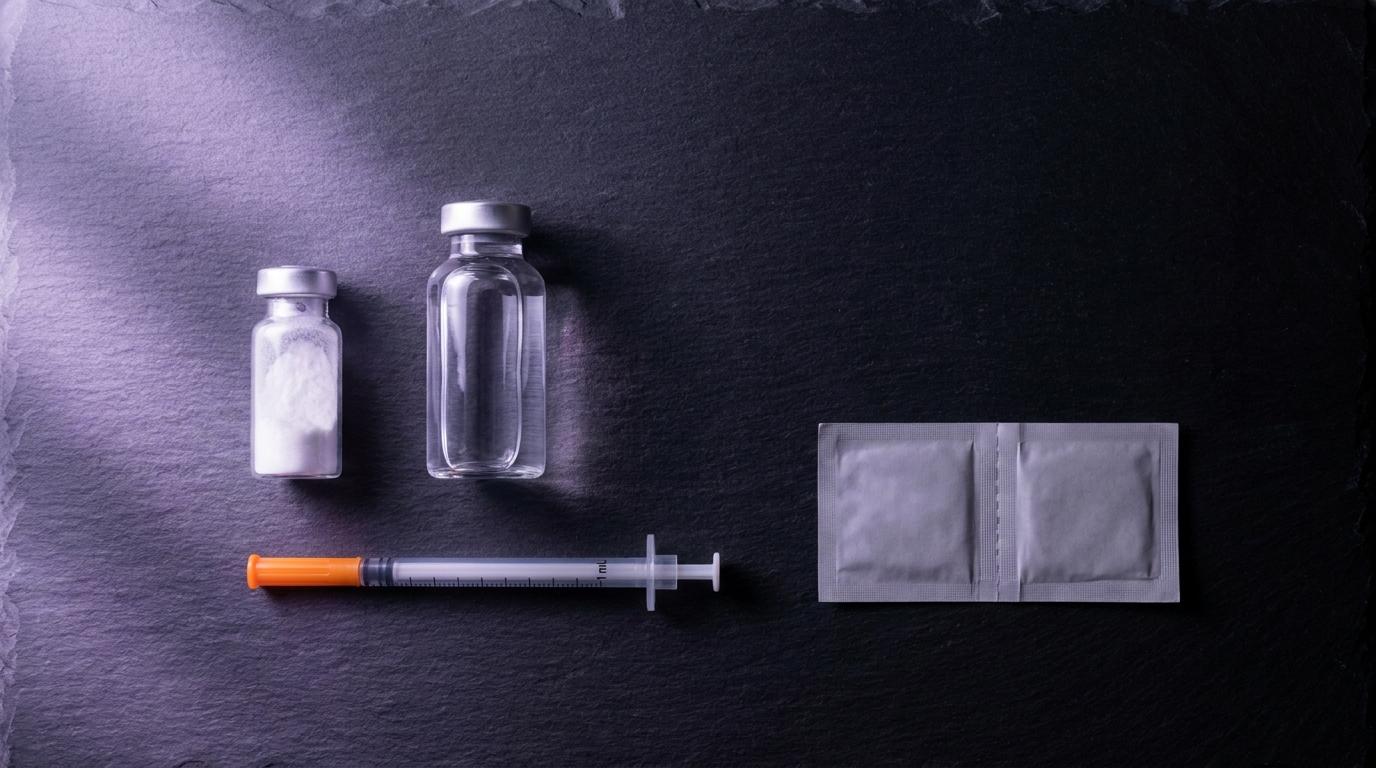
- 1 Peptide vial
- 2 Bacteriostatic water
- 3 U-100 syringe
- 4 Alcohol swabs
Vial size
Water added
- Retatrutide in the vial
- 10 mg
- Water added
- 1 mL
- Strength
- 10 mg/mL
- 1 unit holds
- 100 mcg
Where the doses used in studies land on a 1 mL (100 unit) syringe
Shown to help you read the units, not as advice.
- 2 mg (phase 2 starting dose)20 units
- 4 mg40 units
- 9 mg90 units
- 12 mgover 100 units
Over 100 units means more than one full 1 mL syringe at this strength. Less water makes each unit stronger.
Weekly doses tested in the TRIUMPH phase 3 trials. Shown to help you read the units, not as advice.[1,2]
Retatrutide dosing chart in units- Step 1
Clean
Wipe the vial stopper with an alcohol swab and let it dry.
- Step 2
Add water
Let the bacteriostatic water run slowly down the inside wall of the vial.
- Step 3
Swirl
Swirl or roll gently until clear. Don't shake.
- Step 4
Label and chill
Write the date and strength (mg/mL) on the vial and keep it in the fridge.
The full Retatrutide protocol
- Week-by-week schedule and titration
- What to track and when
- Stacking notes and timing
- Dose tracker with injection-site rotation
- Every study explained in detail
- Step-by-step start guide
07 · Questions
Common questions about Retatrutide
How do I reconstitute retatrutide 10 mg?
A common choice is 2 mL of bacteriostatic water, which gives 5 mg/mL: every 10 units on a U-100 syringe then holds 0.5 mg. Add the water slowly down the side of the vial and swirl gently, don't shake. The chart above shows the units for each studied dose.
How many units is 2 mg of retatrutide?
In a 10 mg vial with 2 mL of water, 2 mg is 40 units. In a 30 mg vial with 3 mL (10 mg/mL), it is 20 units. Always check against your own vial and water.
Is retatrutide approved?
No. Phase 3 results came out in September 2026, but it is not FDA-approved, so there is no pharmacy version yet. Research-grade products sold online are unregulated.
Retatrutide vs tirzepatide: what is the difference?
Tirzepatide acts on GIP and GLP-1 receptors. Retatrutide also acts on the glucagon receptor. They have not been compared head to head in a published trial, so comparing the numbers from separate trials is only a rough guide.
How much weight do people lose on retatrutide?
In TRIUMPH-1, an 80-week phase 3 trial in 2,339 adults with obesity, average weight change was −17.6% on 4 mg, −23.7% on 9 mg and −25.0% on 12 mg weekly, versus −3.9% on placebo.
What are the side effects of retatrutide?
Mostly stomach and gut effects. In TRIUMPH-2, diarrhea affected 27% to 34% and nausea 14% to 28% of people, depending on dose. Low blood pressure and dysesthesia (tingling or sensitive skin) were more common than on placebo, and more common at higher doses.
What doses of retatrutide were tested?
The TRIUMPH phase 3 trials tested 4, 9 and 12 mg once weekly. In phase 2, starting at 2 mg rather than 4 mg reduced stomach side effects. These are the doses the studies used, not a recommendation.
Sources
- 1.Retatrutide, a triple hormone receptor agonist, for treatment of obesity (TRIUMPH-1)
Jastreboff AM et al. N Engl J Med 2026 (online Sep 29) · Human trial - 2.Retatrutide in adults with obesity and type 2 diabetes (TRIUMPH-2)
Bellido V et al. Lancet 2026 (online Sep 29) · Human trial - 3.Triple-hormone-receptor agonist retatrutide for obesity: a phase 2 trial
Jastreboff AM et al. N Engl J Med 2023;389:514-526 · Human trial