Thymosin beta-4
A natural 43-amino-acid protein that cells release after injury. Human trials are small and used topical products and eye drops, not injections. It is not an approved medicine.
- more wound re-covering in rats at day 4 vs saline
- +42%
- people in the phase 2 venous ulcer trial (topical)
- 73
- FDA has identified no human exposure data for the TB-500 fragment
- Not approved
more wound re-covering in rats at day 4 vs saline[1]
people in the phase 2 venous ulcer trial (topical)[2]
FDA has identified no human exposure data for the TB-500 fragment[4]
6 sources, every claim linked. PepDose sells no peptides and takes no vendor money.
01 · What it is
What is Thymosin beta-4?
Thymosin beta-4 is a small protein made naturally by many cell types, including platelets. After injury it is released into the tissue, where studies link it to cell migration, new blood vessel growth and less scarring.
TB-500 is a name used for synthetic products related to thymosin beta-4. The FDA lists TB-500 as a short fragment of the full protein, so the research on the full protein does not automatically apply to a TB-500 vial.
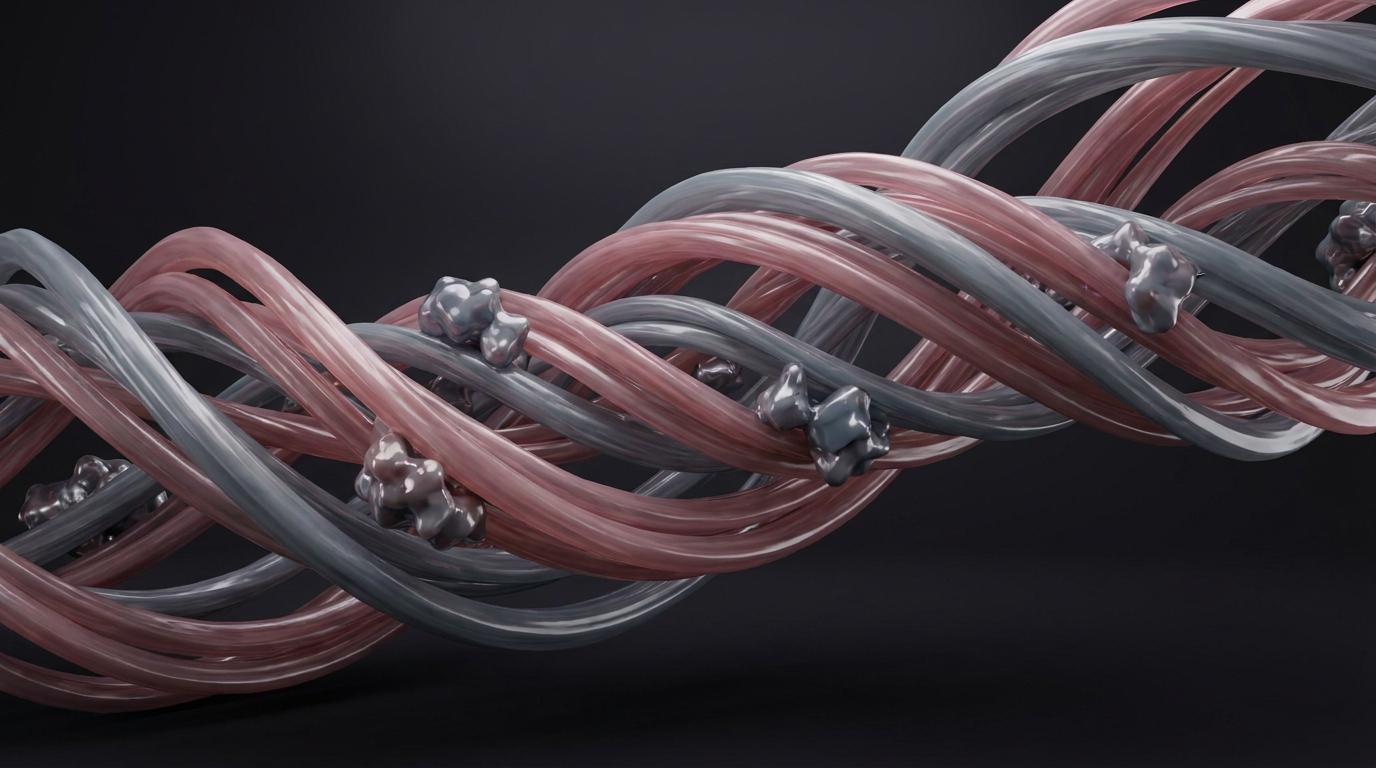
Illustration.
02 · How it works
How does Thymosin beta-4 work?
Thymosin beta-4 binds actin, a protein cells use to move. In lab and animal studies this helped cells migrate into damaged tissue, supported new blood vessel growth and lowered inflammation and scarring. In mice with induced heart damage it also activated a survival pathway in heart muscle cells.
03 · Research
What does the research on Thymosin beta-4 show?
Most of the evidence is in animals. In rats with skin wounds, thymosin beta-4 increased wound re-covering by 42% at day 4 and up to 61% at day 7 compared with saline. Human trials exist but are small: a 73-patient phase 2 trial in venous leg ulcers and a nine-patient trial of eye drops for dry eye.
- In rats with full-thickness skin wounds, thymosin beta-4 given on the wound or by injection into the abdomen increased re-covering of the wound by 42% over saline at day 4 and by as much as 61% at day 7. Treated wounds also contracted at least 11% more by day 7, with more collagen and new blood vessels.[1]
- In mice, after a coronary artery was tied off, thymosin beta-4 treatment raised activity of a survival pathway (ILK and Akt) in the heart, improved early heart muscle cell survival and improved heart function.[5]
- A phase 2, double-blind, placebo-controlled, dose-escalation trial in 73 people with venous leg ulcers (eight European sites) tested a topical thymosin beta-4. The authors reported that a 0.03% dose may have the potential to speed healing, with complete healing within 3 months in about 25% of patients, mainly those with small to moderate or mild to moderate ulcers.[2]
- In a small randomized, double-masked, placebo-controlled phase 2 trial, nine people with severe dry eye used thymosin beta-4 eye drops (0.1%) or vehicle six times a day for 28 days. At day 56 the treated eyes showed a 35.1% greater reduction in ocular discomfort and a 59.1% greater reduction in corneal staining than vehicle. The trial is very small.[3]
- A review of the field describes studied roles in skin, eye, heart and brain repair, and notes that clinical trials were planned or ongoing for skin wounds and corneal injuries.[6]
04 · Side effects
What are the side effects of Thymosin beta-4?
In the 73-patient venous ulcer trial, a topical thymosin beta-4 product had a safety profile judged acceptable and comparable to placebo. Those human trials used topical products or eye drops, not injections. The FDA says it has identified no human exposure data for the TB-500 fragment and flags a risk of immune reactions.
- In the 73-patient venous ulcer trial, the safety profile of all doses of topical thymosin beta-4 was judged acceptable and comparable to placebo. In the dry eye trial the eye drops were reported safe and well tolerated. Both were topical, so neither shows the safety of an injection.[2,3]
- For the fragment known as TB-500, the FDA says it has not identified any human exposure data, and that compounded forms may carry a risk of immune reactions linked to aggregation and peptide-related impurities.[4]
- Because products sold online are unregulated, purity and the actual amount in a vial are unknown.[4]
Commonly listed reasons to avoid it
- Pregnancy and breastfeeding
- Active cancer or a history of cancer
Not approved
05 · Legal and regulatory status
Is Thymosin beta-4 FDA-approved?
No. Thymosin beta-4 is not an FDA-approved medicine. The FDA lists the fragment known as TB-500 among bulk substances nominated for compounding and then withdrawn, and says it has not identified human exposure data for it. Products sold online are unregulated research products.
- Not FDA-approved. The FDA's compounding page (as of 22 April 2026) lists Thymosin Beta-4, Fragment (LKKTETQ), also known as TB-500, in its table of bulk substances nominated but withdrawn, and states it has not identified human exposure data for drug products containing it.[4]
06 · Mixing and units
How do you mix Thymosin beta-4 and read the units?
Units on a U-100 syringe = dose (mg) ÷ concentration (mg/mL) × 100. For example, a 5 mg vial mixed with 2 mL of bacteriostatic water is 2.5 mg/mL, so 10 units hold 0.25 mg. Pick your vial and water below; the maths is the same for any brand of Thymosin beta-4.
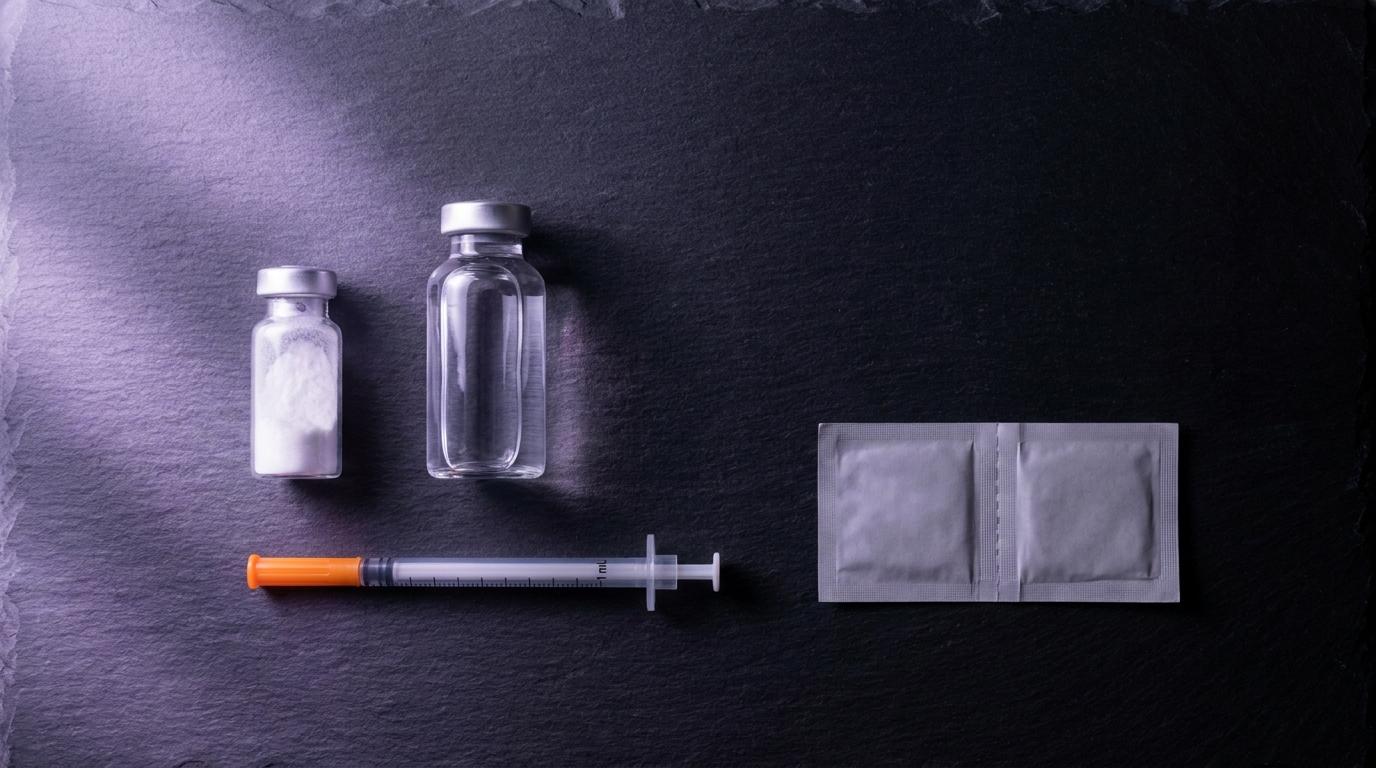
- 1 Peptide vial
- 2 Bacteriostatic water
- 3 U-100 syringe
- 4 Alcohol swabs
Vial size
Water added
- Thymosin beta-4 in the vial
- 5 mg
- Water added
- 2 mL
- Strength
- 2.5 mg/mL
- 1 unit holds
- 25 mcg
- Step 1
Clean
Wipe the vial stopper with an alcohol swab and let it dry.
- Step 2
Add water
Let the bacteriostatic water run slowly down the inside wall of the vial.
- Step 3
Swirl
Swirl or roll gently until clear. Don't shake.
- Step 4
Label and chill
Write the date and strength (mg/mL) on the vial and keep it in the fridge.
The full Thymosin beta-4 protocol
- Week-by-week schedule and titration
- What to track and when
- Stacking notes and timing
- Dose tracker with injection-site rotation
- Every study explained in detail
- Step-by-step start guide
07 · Questions
Common questions about Thymosin beta-4
Is thymosin beta-4 the same as TB-500?
Closely related, not identical. Thymosin beta-4 is the natural 43-amino-acid protein that most research studied. The FDA lists TB-500 as a short fragment (LKKTETQ). Products sold as TB-500 vary, so check what the label says.
What does thymosin beta-4 do?
It binds actin, a protein cells use to move. In lab and animal studies it helped cells migrate into damaged tissue, supported new blood vessel growth and lowered inflammation and scarring. Human evidence is limited to small trials of topical products.
Has thymosin beta-4 been tested in humans?
Yes, in small trials of topical products and eye drops, including 73 people with venous leg ulcers and nine people with severe dry eye. Those trials do not show that injected products work or are safe.
Is thymosin beta-4 FDA-approved?
No. It is not an approved medicine. The FDA lists the TB-500 fragment among bulk substances nominated for compounding and then withdrawn, and says it has not identified human exposure data for it.
What are the side effects of thymosin beta-4?
In the small topical trials the safety profile was reported as acceptable and comparable to placebo. For injected products the effects are not known, and the FDA flags a risk of immune reactions for compounded forms.
How much BAC water for a 10 mg vial?
With 2 mL the vial is 5 mg/mL, so 10 units on a U-100 syringe holds 0.5 mg and 50 units holds 2.5 mg. With 1 mL it is twice as strong per unit.
Sources
- 1.Thymosin beta4 accelerates wound healing
Malinda KM et al. J Invest Dermatol 1999;113:364-368 · Animal study - 2.The effect of thymosin treatment of venous ulcers
Guarnera G et al. Ann N Y Acad Sci 2010;1194:207-212 · Human trial - 3.Thymosin beta4 significantly improves signs and symptoms of severe dry eye in a phase 2 randomized trial
Sosne G et al. Cornea 2015;34:491-496 · Human, small study - 4.FDA compounding safety-risk list
FDA. Bulk drug substances for compounding that may present significant safety risks (as of Apr 22, 2026) · FDA - 5.Thymosin beta4 activates integrin-linked kinase and promotes cardiac cell migration, survival and cardiac repair
Bock-Marquette I et al. Nature 2004;432:466-472 · Animal study - 6.Thymosin β4: a multi-functional regenerative peptide
Goldstein AL et al. Expert Opin Biol Ther 2012;12:37-51 · Review
How we choose and check sources: editorial policy. Unit maths: methodology.